Vaccines, Math, Ben Affleck, Acetaminophen, and Eye Rolls. Lots, and Lots of Eye Rolls.
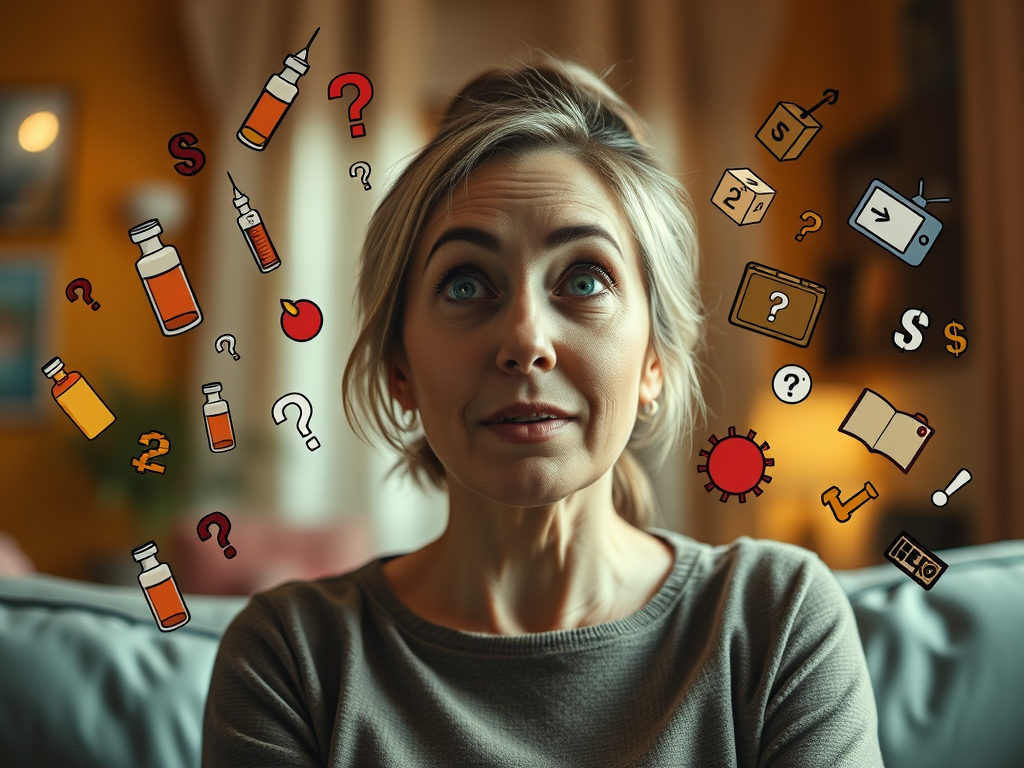
I’m Mom to an autistic – now young adult and waaay too much like his parents for my comfort – individual. That means I’m occasionally asked what I think when a new TV show or movie depicting an autistic individual hits streaming, or new information about what causes autism hits the headlines. Some common questions I get asked are:
- Do you think vaccines/gluten/mercury/pollution, etc. causes autism?
- Would/did you vaccinate your son?
- Is your son really good at math?
- Does The Accountant, The Good Doctor, Rainman, etc. accurately describe autism?
- Do you think such and such therapy helps autism?
- What do you think about what so-and-so politician/public figure/celebrity just said about autism?
and, rounding out the list:
Do you think there is/want a cure for autism?
My answers are, in order:
- I don’t know. I haven’t read up the subject in awhile.
- Yes. I weighed the risks and the benefits, and, for me, personally, decided the risks were/are too great not to.
- Eye roll, but yes.
- Double eye roll.
- I don’t know. Here’s what current science says.
- I haven’t caught the headlines lately.
- If I roll my eyes again, they’re going to get stuck.
Of course, these are my answers now, over 20 years after Leading Man #1 (as I call my son) was diagnosed. That’s one-third of my lifetime and four-fifths of his. I am well past the initial shock – yes, it is shocking – of diagnosis. High school, the toughest part of JR’s life on the spectrum – and mine. IEPs are soul-crushing – is behind us.
I get it, though. I really do.
Ok, not the math thing. Yes, my son is good at math, but, as I’m one-half of his parentage, arguably the half he inherited autism from – it has to be coincidental. Math and I are NOT friends.

When JR was first diagnosed, I replayed every moment of my pregnancy, childbirth, and his first four years, looking for answers.
- Was it the peanut butter M&Ms I ate for lunch every day at work?
- Did that glass of wine at dinner that one time have something to do with it?
- Should JR have gotten the then new to the market Merck chicken pox vaccine?
- Was it something I did, didn’t do, was, or wasn’t doing?
It didn’t matter how many times the current science (I spent many hours out on PubMed, in the local library, in my college library, and online researching autism, vaccines, etc.), a school social worker, my son’s neurologist, or his pediatrician – or anyone else for that matter – said “It wasn’t your fault. No one knows what causes this,” I still thought I, personally, had done something wrong.
…and yes, back then, I wanted a cure. I’m a mom. I was watching my child struggle. I was watching the polite but disinterested avoidance his neurotypical peers treated him with and his reaction, and I wanted answers and a cure.
When your kid is hurting, you just want to know why. You turn over every grain of sand on the beach. You think that if you know why, what the cause is, you can fix it for them. Right, wrong, scientifically refuted, doesn’t matter.
…and yes, even if you think you shouldn’t, you want a “cure.” A cure will take away your child’s pain. A cure, you think, will make their lives easier. Right, wrong, scientifically refuted, doesn’t matter.
I am standing right where you will be in 20 years, looking back, and telling you, even autistic, intellectually, or otherwise disabled kids grow up and succeed. Just like their neurotypical peers, though, what that success looks like is unique to them.
Eventually, you get too immersed in the day-to-day of raising a disabled kid, and fall too much in love with that child just as they are to care about those things. You set up your kid’s IEP, their care team of physicians, social workers, education professionals, neurologists, etc., and life becomes…routine, or at least as routine as you and your kid’s life is ever going to get. Nothing on the spectrum is routine. You learn to protect your child – as best you can – from the harsh words of others and the polite distance of their peers. Your kid grows, and succeeds, and moves forward.
No, really. They do. I am standing right where you will be in 20 years, looking back, and telling you, even autistic, intellectually, or otherwise disabled kids grow up and succeed. Just like their neurotypical peers, though, what that success looks like is unique to them. My son is graduating from one of the three college programs for autistic adults he was accepted to next year, after a well-meaning school social worker told me he wouldn’t go to college at all.
Still, there are bumps – sometimes large, New York City or Chicago style sinkholes, in the road…and when, inevitably, your child hurts or struggles, you come right back to that beach with a shovel and a pail – and maybe an electron microscope. JR is almost 25, fiercely self-sufficient and independent, living in a group home, and wrapping up his final year of college, and I STILL have those moments every time – as it inevitably does, life isn’t perfect – something goes awry:
- What did I do wrong?
- Is there a way to make this better?
- What if we tried..x, y, z new therapy, treatment, etc.
Here’s the thing: raising a human is harder than what the guy with his finger on the big red “deploy nuclear bomb” button does. You make the best choices you can for your kids based on the information you have at the time. No one, not even another parent, can tell you how to raise your children, or what choices to make for them. I definitely won’t. I’m your advocate. I’m here to support you in the here and now.
I’ll even lend you my electron microscope…
Cheers,
Cris